You are getting ready for work, a wedding, dinner, or an important event when it happens — coffee lands on your shirt, wine touches your dress, makeup marks a collar, or sauce drops onto your favourite blazer. In that moment, it is tempting to panic, grab soap, and start rubbing. But knowing how to treat common stains before your dry cleaning can make the difference between saving a garment and making the stain harder to remove.
At Canada’s Cleaners, we know how stressful it feels when an expensive or favourite item is stained. You want to fix it quickly, but the wrong home treatment can set the stain, spread it, fade the fabric, or damage delicate fibres. This guide shows what to do first, what to avoid, and when to bring the garment in for professional care.
For expert stain handling and garment care, explore our professional dry cleaning service in London, Ontario for suits, dresses, coats, formalwear, and delicate fabrics.
Why Stain First Aid Matters Before Dry Cleaning
A stain is not just “dirt” sitting on fabric. Different stains behave in different ways. Coffee, wine, ink, oil, makeup, mud, sweat, and road salt each interact with fibres differently. Some are water-based. Some are oil-based. Some contain dyes or tannins. Some become worse with heat.
That is why the first few minutes matter.
When you treat common stains before your dry cleaning the right way, you help protect the fabric and give the professional cleaner a better chance of removing the mark. When you treat a stain the wrong way, you may accidentally push it deeper, spread it wider, or chemically change it.
The most important rule is simple: do not rub aggressively.
Rubbing can damage the fabric surface, especially on wool, silk, rayon, linen, satin, and delicate blends. It can also create a lighter or fuzzy patch that remains visible even after the stain is gone.
Your clothes deserve careful handling, not panic cleaning.
The Safe First Step for Most Fresh Stains
Before thinking about the stain type, start with a calm, fabric-safe approach.
Use this simple plan:
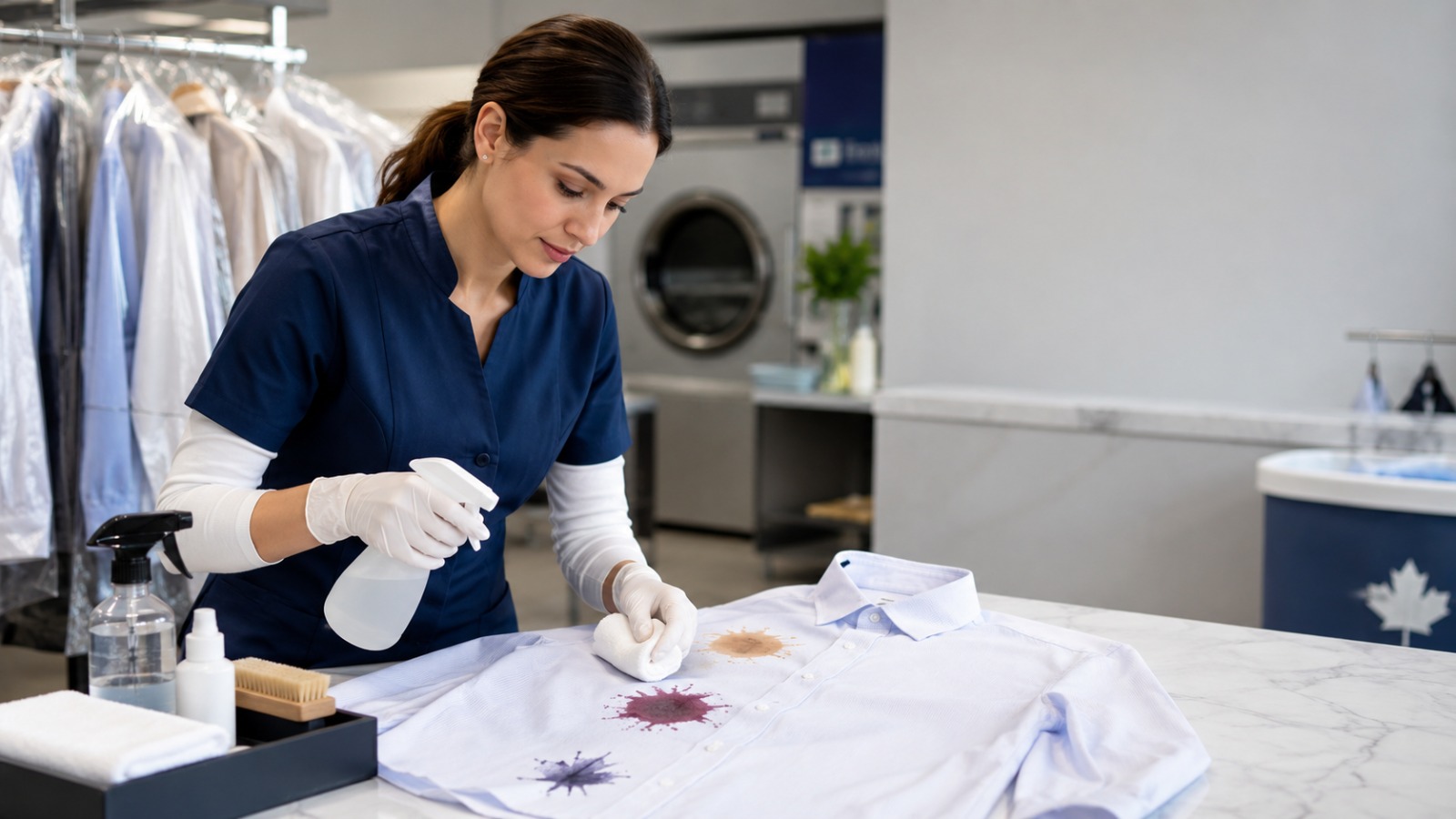
- Blot, do not rub
Use a clean white cloth, paper towel, or napkin. Press gently to lift moisture from the fabric. - Work from the outside inward
This helps prevent the stain from spreading. - Avoid hot water
Heat can set many stains, especially protein stains like blood, milk, sweat, and some food marks. - Do not use bleach
Bleach can remove colour, weaken fibres, and create permanent damage. - Do not apply random stain removers
Some products are too harsh for dry-clean-only garments or delicate fabrics. - Check the care label
If the garment says “dry clean only,” avoid soaking or washing it at home. - Bring it in quickly
Fresh stains are usually easier to treat than old stains.
This basic approach works for many emergency situations. It buys time without making the problem worse.
How to Treat Coffee, Tea, and Wine Stains
Coffee, tea, and wine are common stains, especially during workdays, weddings, parties, and restaurant visits. These stains often contain tannins, which can bond with fibres if left untreated.
What to do
Blot the stain gently with a clean white cloth. If the fabric care label allows light moisture, you may dab the area with cool water, then blot again. Keep the garment flat if possible and avoid spreading the stain.
What not to do
Do not rub. Do not use hot water. Do not add soap, vinegar, lemon juice, or baking soda to delicate or dry-clean-only garments without professional advice. These home methods may work on some washable fabrics, but they can damage colour or texture on formal clothing.
When to bring it in
Bring the garment in as soon as possible, especially if it is silk, wool, a suit, a dress, or light-coloured clothing. White wine and champagne can be tricky because they may dry clear, then yellow later due to sugar.
How to Handle Oil, Grease, and Food Stains
Grease stains are common from salad dressing, butter, pizza, sauces, fried food, and cooking oils. These stains can be harder than they look because oil can spread and sink into fibres.
What to do
Gently lift any solid food with the edge of a spoon or dull knife. Do not scrape hard. Then blot the area with a clean white cloth. If there is excess oil, lightly place a dry cloth over the stain to absorb what you can.
What not to do
Do not pour water onto an oil stain. Water may not help and can spread the mark. Do not rub with napkins, because many restaurant napkins can leave lint or dye. Avoid dish soap on dry-clean-only garments unless a professional tells you it is safe.
When to bring it in
Oil and grease stains should be handled professionally, especially on suits, dresses, coats, blazers, and delicate fabrics. For tailored garments, Canada’s Cleaners also provides suit and dress clothes cleaning to help protect structure, lining, and fabric finish.
What to Do About Ink Stains
Ink stains are one of the easiest stains to make worse at home. Pens can leak in pockets, bags, work shirts, suit jackets, and uniforms. The stain may look small at first but spread quickly if treated incorrectly.
What to do
Stop the ink from spreading. Place a clean white cloth under the stained area if possible, then blot gently from the top. Keep the garment away from heat.
What not to do
Do not rub. Do not apply alcohol, hairspray, sanitizer, or acetone to delicate garments. These may remove some inks from certain washable fabrics, but they can also remove dye, damage fibres, or create rings on professional clothing.
When to bring it in
Bring ink-stained garments in quickly. Tell the cleaner what caused the stain if you know — ballpoint pen, marker, printer ink, or gel pen. Different inks may require different treatment.
Makeup, Lipstick, and Deodorant Marks
Makeup and deodorant stains are especially common on collars, dresses, formalwear, wedding guest outfits, and work clothing. Foundation and lipstick often contain oils, waxes, pigments, and dyes, which can make them stubborn.
What to do
For powder makeup, lightly shake or brush off the excess without pressing it deeper. For liquid foundation or lipstick, blot carefully. Keep the garment dry unless the care label clearly allows moisture.
What not to do
Do not use makeup remover on clothing unless you are certain it is safe for the fabric. Many makeup removers contain oils or solvents that can leave a second stain. Do not rub deodorant marks hard, especially on dark fabrics.
When to bring it in
Bring the garment in if the mark is on silk, satin, wool, rayon, a blazer, formal dress, or dry-clean-only item. Point out the exact area when dropping it off, because makeup can be difficult to see under certain lighting.
Blood, Sweat, and Protein-Based Stains
Protein stains include blood, sweat, milk, egg, and some food stains. These need special caution because heat can set them into the fabric.
What to do
If the fabric care label allows it, gently blot with cool water. Use only a small amount and avoid soaking the garment. Keep the area cool and bring it in soon.
What not to do
Do not use hot water. Do not put the item in a dryer. Do not iron over the stain. Heat can make protein stains much harder to remove.
When to bring it in
If the garment is dry-clean-only, delicate, lined, structured, or valuable, skip home treatment and bring it in. This is especially important for suits, dresses, formalwear, and winter coats.
Mud, Grass, and Road Salt Stains
In London, Ontario, clothing stains are often seasonal. Spring and summer bring grass and mud from outdoor events. Winter brings road salt, slush, and grey residue on hems, cuffs, coats, and dress pants.
What to do with mud
Let mud dry first. Once dry, gently brush off loose dirt. Wet mud can spread deeper into the fibres if rubbed.
What to do with grass
Blot gently if fresh, but avoid aggressive rubbing. Grass contains natural pigments that can stain fabric.
What to do with road salt
Let the garment dry, then gently brush away loose salt. Do not scrub hard. Salt can weaken fibres and leave white marks, especially on dark wool, dress pants, and coats.
When to bring it in
Bring garments in for professional cleaning if the stain is on wool, formal clothing, outerwear, or light-coloured fabric. Salt and mud can become more difficult to remove if left too long.
What You Should Never Do Before Dry Cleaning
Most stain damage happens because someone tries too hard to fix the problem at home. The intention is good, but the result can be permanent.
Avoid these common mistakes:
- Do not rub stains aggressively
- Do not use hot water on unknown stains
- Do not apply bleach
- Do not use coloured towels or napkins
- Do not iron or steam over a stain
- Do not put stained clothing in the dryer
- Do not use several stain products at once
- Do not ignore invisible spills like white wine or champagne
- Do not store stained clothing for months
- Do not forget to tell the cleaner what happened
If you are unsure, do less, not more. Blot gently and bring the garment in.
Why You Should Tell the Cleaner What Caused the Stain
Professional cleaners are not guessing from appearance alone. Knowing what caused the stain helps guide the safest treatment.
When dropping off a garment, share:
- What caused the stain, if known
- When it happened
- Whether you tried any home treatment
- Whether the garment was exposed to heat
- Any special fabric concerns or care-label instructions
This information matters. A coffee stain from this morning is different from a coffee stain that was steamed, rubbed with soap, and stored for three weeks. A cleaner can often help more when they know the full story.
For more general garment-care questions, Canada’s Cleaners also has a helpful dry cleaning FAQ page covering common customer concerns.
A Simple Stain Plan for Busy London Families
If you want a simple system, use this plan at home:
- Keep clean white cloths available
They are safer than coloured towels or printed napkins. - Blot immediately
Remove excess liquid before it spreads. - Avoid heat
Do not iron, steam, or dry the garment before the stain is treated. - Separate the garment
Keep it out of the laundry pile so it does not get washed or dried by mistake. - Bring it in quickly
The sooner a professional sees it, the better the chance of a good result.
This plan is easy to follow whether the stain happens at home, work, a wedding, a restaurant, or during travel.
Conclusion: The Right First Step Can Save the Garment
Learning how to treat common stains before your dry cleaning is not about becoming a stain expert. It is about knowing what to do in the first few minutes — and what not to do.
Blot gently. Avoid heat. Skip harsh products. Do not rub. Tell the cleaner what happened. These simple steps can protect your clothes, reduce permanent damage, and give professional cleaning the best chance to work.
Success looks like saving your favourite suit, dress, blouse, coat, or shirt before a stain becomes permanent. Waiting too long or using the wrong home remedy can leave marks, colour loss, fabric damage, or frustration that could have been avoided.
Direct CTA: Bring stained garments to Canada’s Cleaners in London, Ontario for professional dry cleaning and stain care.
Transitional CTA: Read more about our professional dry cleaning service to understand which garments need expert fabric care.
FAQ
Should I rub a stain before taking it to the dry cleaner?
No. Rubbing can push the stain deeper, spread it wider, and damage the fabric surface. It may also create a fuzzy or lighter patch that remains visible after cleaning. Blot gently with a clean white cloth instead, then bring the garment in as soon as possible.
Can I use water on a stain before dry cleaning?
Sometimes, but only with caution. Cool water may help some fresh water-based stains if the care label allows it. However, water can damage certain fabrics or spread oil-based stains. If the garment is dry-clean-only, delicate, lined, or expensive, blot only and ask a professional.
What stains are hardest to remove from clothes?
Ink, oil, grease, wine, makeup, dye transfer, old sweat stains, and stains exposed to heat can be difficult. The longer a stain sits, the harder it may be to remove. Home treatments can also complicate the process if they set the stain or damage fabric.
Should I tell the cleaner what caused the stain?
Yes. Tell the cleaner what caused the stain, when it happened, and whether you tried any home treatment. This helps them choose the safest and most effective cleaning method. A fresh coffee stain is different from one that was rubbed, heated, or treated with soap.
Can dry cleaning remove old stains?
Sometimes, but there is no guarantee. Older stains may oxidize, bond with fibres, or change colour over time. Professional cleaning may improve or remove them, but fresh stains usually respond better. Bring stained garments in quickly and avoid heat, rubbing, or harsh products.