
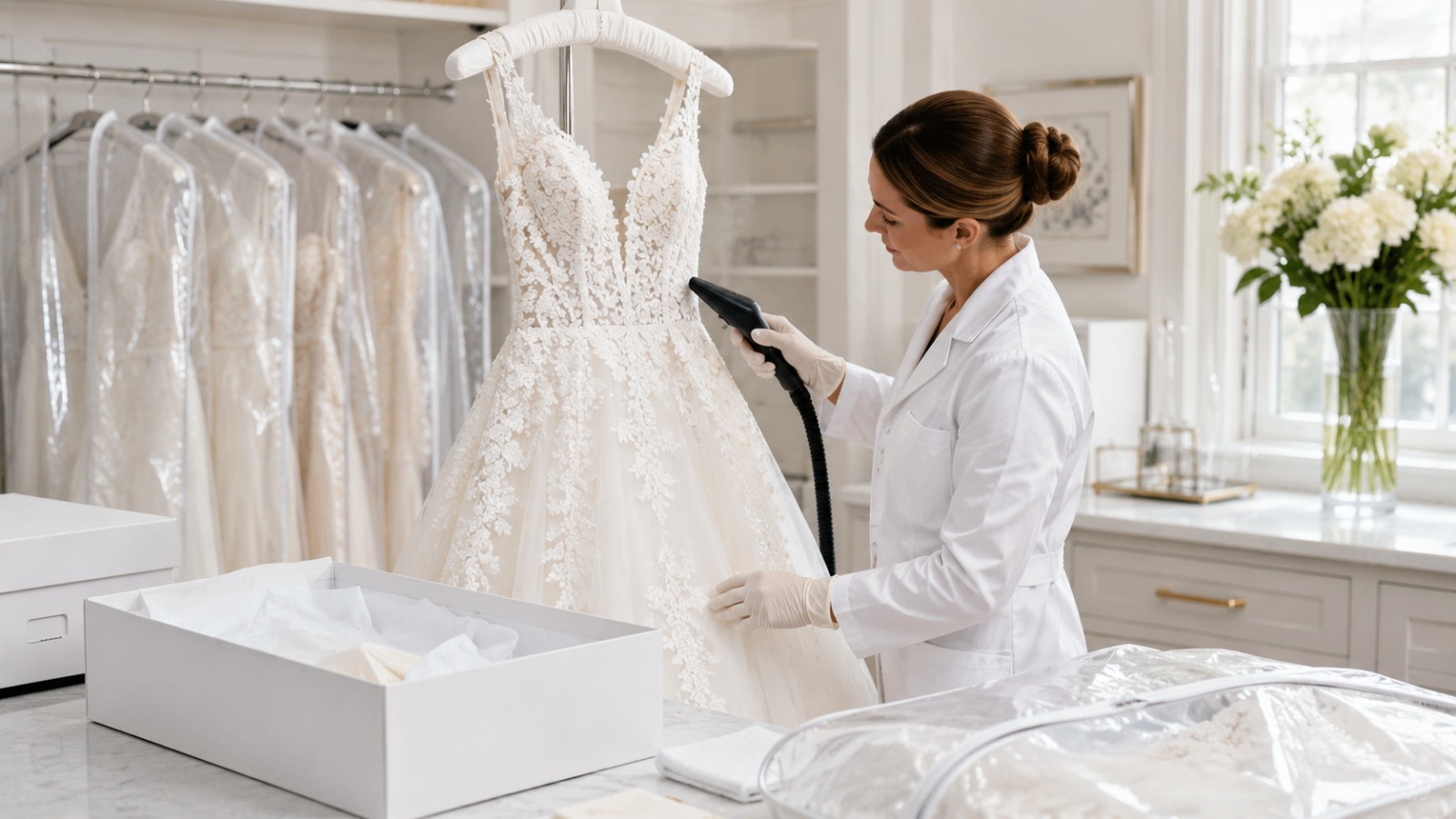
You spent months choosing the dress, tailoring the fit, and imagining the moment you would wear it. Then the wedding day happens — joyful, emotional, busy, and sometimes messy. Between makeup, perfume, food, champagne, grass, dance-floor dust, and Ontario weather, your gown can collect more than beautiful memories. That is why wedding dress cleaning and preservation in Ontario matters so much.
At Canada’s Cleaners, we know how it feels when a dress that means everything suddenly feels too delicate to touch. You want to protect it, but you do not want to risk damage with the wrong cleaning method. This guide explains what to do, what to avoid, and how professional care helps preserve your gown for years.
For delicate bridal garments, explore our professional wedding dress cleaning service for gowns, veils, and special-occasion pieces.
Why Wedding Dress Cleaning and Preservation in Ontario Matters
Your wedding dress is not just another garment. It may include silk, satin, lace, tulle, organza, chiffon, beading, embroidery, appliqué, sequins, buttons, boning, layers of lining, or a long train that has touched sidewalks, grass, floors, and photo locations.
Even when a gown looks clean at first glance, hidden residue can remain in the fabric. Clear stains from white wine, champagne, sugar, sweat, or perfume may not show immediately. Over time, they can oxidize and turn yellow or brown. Body oils around the bodice and underarms can also darken if left untreated.
Ontario weddings add their own challenges. A summer wedding in London can mean heat and perspiration. A fall wedding can bring mud and damp leaves. A winter wedding may expose the hem to slush, salt, and moisture. A spring wedding can involve rain, grass, and outdoor photos.
Professional wedding dress cleaning and preservation in Ontario helps remove these risks before they become permanent.
Cleaning vs. Preservation: What Is the Difference?
Many brides use the words “cleaning” and “preservation” together, but they are not exactly the same.
Wedding dress cleaning focuses on carefully removing soil, stains, oils, odours, and residue from the gown. This step is essential before storage. A gown should never be preserved while dirty because stains can darken over time.
Wedding dress preservation focuses on preparing the cleaned gown for long-term protection. This may include careful inspection, proper folding, acid-free materials, breathable storage, and boxing methods that reduce yellowing, creasing, and fabric stress.
Think of it this way: cleaning protects the dress from what happened on the wedding day. Preservation protects the dress from what could happen in the next 10, 20, or 30 years.
Both steps matter if you want the gown to remain beautiful for sentimental, family, or resale value.
When Should You Clean Your Wedding Dress?
The best time to clean a wedding dress is as soon as possible after the wedding, ideally within a few days to a few weeks. If you are leaving for a honeymoon right away, ask a trusted family member to bring the gown in for professional care.
Waiting several months can make stains harder to remove. Some spills are invisible at first, especially sugary drinks or light-coloured alcohol. They may look harmless now, but later they can turn into yellow marks.
Here is a simple timeline:
- Within 24 hours: hang the dress carefully in a cool, dry place.
- Within 1 week: inspect the hem, bodice, underarms, train, and any beading.
- Within 2 to 4 weeks: arrange professional cleaning.
- After cleaning: decide whether you want long-term preservation.
- For long-term storage: use breathable, acid-free storage materials.
If the dress has wine, mud, makeup, blood, heavy sweat, or road salt on it, do not wait. Bring it in quickly and point out the areas of concern.
What Stains Are Common on Wedding Dresses?
Wedding dresses can collect stains from almost every part of the day. Some are visible right away, while others are hidden in the fibres.
Common gown stains include:
- Makeup and foundation around the neckline or bodice
- Lipstick from hugs, photos, or touch-ups
- Perfume and deodorant near the underarms and chest
- Champagne or white wine that may dry clear
- Cake icing or sugar that can yellow later
- Grass and soil on the hem or train
- Road salt and slush during winter weddings
- Body oils and perspiration in fitted areas
- Dust and floor marks from reception venues
- Tannin stains from coffee, tea, or wine
The most important rule is simple: do not scrub the dress at home. Wedding gown fabrics and trims can be fragile. Rubbing can damage fibres, spread a stain, loosen beading, or create a visible texture change.
If you notice a stain, gently blot with a clean white cloth if it is fresh, then let a professional cleaner evaluate it.
How Professional Wedding Dress Cleaning Works
A careful cleaning process starts with inspection, not cleaning. Every gown is different, and the safest method depends on the fabric, construction, stains, trims, and care label.
At Canada’s Cleaners, a professional review may include checking:
- Fabric type, such as silk, satin, polyester, lace, tulle, or chiffon
- Trim details, including beads, pearls, sequins, crystals, or appliqué
- Construction, such as boning, layers, lining, buttons, and bustle points
- Visible and hidden stains
- Hem and train condition
- Colour, texture, and fabric sensitivity
- Manufacturer care instructions
After inspection, the gown is cleaned using a method suited to the dress. Some gowns require delicate dry cleaning. Others may need targeted stain treatment before cleaning. Some trims can react poorly to heat, moisture, or certain solvents, so testing and professional judgement are important.
For gowns and other delicate garments that need expert handling, Canada’s Cleaners also provides professional dry cleaning in London, Ontario for formalwear, suits, dresses, coats, and specialty fabrics.
What Not to Do With Your Wedding Dress After the Wedding
After the reception, it is normal to feel exhausted and want to deal with the dress later. But a few wrong moves can create long-term problems.
Avoid these common mistakes:
Do not store it in plastic for months
Plastic garment bags can trap moisture and limit airflow. Over time, this can contribute to mildew, odour, or yellowing. Short-term transport is fine, but long-term storage should be breathable.
Do not hang a heavy gown forever
Some gowns are too heavy to hang long-term. The weight can stress shoulder seams, straps, lace, or delicate bodices. Preservation storage often uses careful folding to reduce strain.
Do not use home stain removers
Many stain removers are too harsh for bridal fabrics. They may bleach, discolour, weaken fibres, or damage embellishments.
Do not iron delicate areas yourself
High heat can melt synthetic fibres, flatten texture, mark satin, or damage beading. If the gown needs pressing or finishing, professional care is safer.
Do not assume “it looks clean” means it is clean
Invisible stains are one of the biggest risks. Sugar, alcohol, perfume, and body oils can appear later if they are not removed before storage.
Should You Preserve the Dress or Just Clean It?
Not every bride needs full preservation, but every wedding dress should be cleaned before storage.
Preservation is a good choice if:
- You want to keep the gown as a family heirloom
- You may pass it to a child, relative, or friend one day
- The dress has sentimental value
- You want to protect delicate fabric from yellowing
- You invested in a designer or custom gown
- You may sell it later and want it stored properly
Cleaning alone may be enough if you plan to wear the dress again soon, alter it into another garment, donate it quickly, or sell it immediately after cleaning.
The honest trade-off is cost versus long-term protection. Preservation usually costs more than basic cleaning because it involves extra care, materials, and storage preparation. But if the dress matters to you emotionally or financially, preservation can be worth it.
How to Store a Wedding Dress After Cleaning
Once your gown is professionally cleaned, storage becomes the next step. The goal is to protect fabric from light, moisture, dust, insects, and pressure.
Use these storage tips:
- Choose a cool, dry location
Avoid basements, garages, and attics. Temperature and humidity swings can damage fabric. - Avoid direct sunlight
Light can cause fading and yellowing, especially on delicate materials. - Use breathable materials
Acid-free tissue and breathable boxes are better than plastic bags for long-term storage. - Keep it off the floor
Store the gown safely on a shelf or in a closet where it will not be crushed. - Do not open and handle it often
Oils from hands can transfer to fabric. If you want to inspect it, wash and dry your hands first or use clean cotton gloves. - Check it occasionally
A quick visual check once or twice a year can help you spot moisture, pests, or storage issues early.
A preserved gown should feel protected, not forgotten. The right storage gives you peace of mind every time you think about it.
A Simple Plan for Brides in London, Ontario
If you are not sure what to do with your dress, follow this simple plan:
- Bring the gown in soon after the wedding
The sooner stains are evaluated, the better the chances of successful removal. - Point out known stains or problem areas
Mention wine, makeup, mud, perfume, sweat, grass, road salt, or anything that happened during the day. - Ask whether cleaning or preservation is best
Your next step depends on whether you plan to keep, sell, donate, or reuse the gown. - Store the gown properly after cleaning
Use breathable, protective materials and avoid damp or hot storage areas.
If you have questions about your specific dress, you can contact Canada’s Cleaners and ask about the safest next step before the gown sits too long.
Conclusion: Protect the Dress That Carries the Day
Your wedding dress carries one of the most meaningful days of your life. It deserves more than being left in a closet, still holding invisible stains, body oils, dust, or salt from the celebration.
Professional wedding dress cleaning and preservation in Ontario helps protect the beauty, structure, and memories of your gown. Whether you want to keep it forever, pass it down, sell it, or simply store it with confidence, the right care starts soon after the wedding.
Direct CTA: Bring your wedding dress to Canada’s Cleaners in London, Ontario for careful professional cleaning and preservation guidance.
Transitional CTA: Learn more about our wedding dress cleaning service before deciding how you want to protect your gown.
FAQ
How soon should I clean my wedding dress after the wedding?
Ideally, clean your wedding dress within a few days to a few weeks after the wedding. Stains from sweat, sugar, wine, makeup, grass, or road salt can become harder to remove over time. If you are leaving for a honeymoon, ask someone you trust to bring it in.
Can invisible stains really damage a wedding dress?
Yes. Clear stains from champagne, white wine, perfume, sweat, or sugary drinks may not show immediately. Over time, they can oxidize and turn yellow or brown. That is why professional inspection and cleaning are recommended even when the gown appears clean.
Is wedding dress preservation worth it?
Preservation is worth considering if you want to keep the gown long-term, pass it down, protect sentimental value, or maintain resale condition. Cleaning removes wedding-day residue, while preservation focuses on safer long-term storage using protective materials and careful handling.
Can I store my wedding dress in the original garment bag?
The original garment bag is usually fine for short-term transport, but it may not be ideal for long-term storage. Plastic can trap moisture and limit airflow. For long-term protection, breathable storage materials and acid-free tissue are generally safer.
What should I tell the cleaner about my dress?
Tell the cleaner about any known stains, including wine, makeup, mud, grass, perfume, sweat, food, or road salt. Also mention delicate details such as beads, lace, crystals, appliqué, or alterations. The more information provided, the better the cleaning plan can be.